Snorkelling is the easiest way to peek into the underwater world. No certification is needed, just a mask, a snorkel, and a bit of courage. Precisely because it's so easy, many people forget they are entering another creature's home. One careless kick of a fin can damage something that took years to grow.
This article introduces five simple rules of etiquette that make your visit enjoyable for us without harming the sea.
Why coral reefs need protecting
Coral reefs are built by tiny animals called polyps that live in colonies and form a limestone skeleton. They grow very slowly, only a few millimetres to a few centimetres a year depending on the species. That means coral broken today won't recover quickly.
Coral reefs also provide shelter and breeding grounds for many fish and shield the coast from pounding waves. Many marine tourism areas in Indonesia, such as Karimunjawa and Wakatobi, are national parks precisely because of the richness of this ecosystem.
1. Don't touch, step on, or hold onto coral
This is rule number one. Touching with your hands can injure the living tissue of the coral and transfer oils or germs from your skin. Standing on coral, even coral that looks dead, can break structures that are home to tiny creatures.
If you need a rest, ask for a float or return to the boat. Avoid kicking your fins too deep in shallow water, because the sweep of fins and stirred-up sand can smother and hurt coral. Swimming horizontally with small kicks is much safer.
2. Keep your distance from turtles and marine life
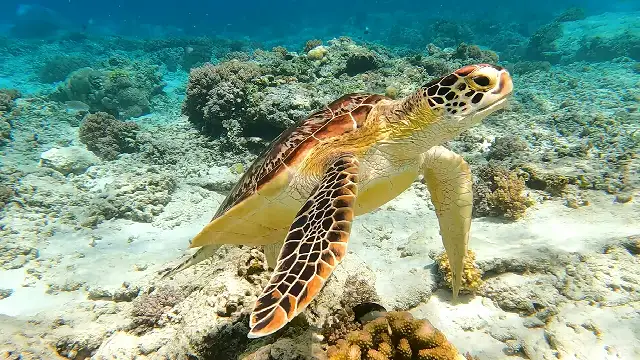
Meeting a turtle is a moment that makes many people cheer. Hold back the urge to chase, touch, or ride it. Turtles must surface to breathe, and being chased constantly stresses them and drains their energy. Keep your distance, don't block their path to the surface, and don't use a flash up close.
The same rules apply to rays, reef sharks, and fish. Don't feed wildlife. Human food changes natural behaviour and can make fish dependent on handouts from visitors.
3. Choose the right sun protection
Some chemicals in sunscreen are suspected of harming coral, and several countries have even banned certain ingredients such as oxybenzone and octinoxate. The extent of the impact is still being researched, but the safest step is already clear.
- Wear long-sleeved swimwear or a rash guard to protect your skin, so you need less sunscreen.
- If you use sunscreen, choose one labelled reef-safe or mineral-based, and apply it half an hour before entering the water.
- Wear a hat and sunglasses while on the boat.
4. Don't take anything, and take your rubbish home
Coral, shells, starfish, or sand should not be taken as souvenirs. In many conservation areas, taking marine life is an offence. Even empty shells serve as homes for small animals such as hermit crabs.
Make sure all your rubbish, including snack wrappers and cigarette butts, goes back to land with you. Plastic carried by currents can be eaten by turtles or snag on coral.
5. Swim within your ability and follow your guide
Etiquette also concerns safety. Don't push yourself if you aren't comfortable in deep water. Wear a life vest, especially if you're just learning. Practise calm breathing through the snorkel in shallow water before moving to farther spots.
Listen to your guide about currents, safe hours, and area limits. Stay close to the group, and don't swim into areas where boats pass. A panicking swimmer is a risk to themselves and to the marine life around them.
How to choose a responsible operator
A good operator usually gives a briefing before you get in the water, provides life jackets in the right size, limits the number of people at one spot, and forbids visitors from touching marine life. If a guide invites you to hold or feed animals for a photo, that is a bad sign. Your choices as a customer help shape the tourism practices that exist.
Final thoughts
Protecting the sea doesn't take anything complicated: keep your hands to yourself, keep your distance, protect your skin in a friendlier way, leave everything as you found it, and swim mindfully. If you'd like to try snorkelling with a local guide, take a look at destinations such as Karimunjawa and Wakatobi.